

Comparative Economic Analysis of High-Income Agricultural Enterprises
Agriculture is rapidly evolving from traditional farming practices into a modern, investment-driven sector that offers multiple opportunities for sustainable income generation. With advancements in technology, protected cultivation, scientific livestock management, and high-value horticulture, farmers and agripreneurs now have access to enterprises that can deliver significantly higher returns than conventional crops.
Choosing the right enterprise, however, depends on several important factors including initial investment, expected annual turnover, profitability, return on investment (ROI), and the payback period. Understanding these economic indicators helps farmers make informed decisions based on their available resources, market demand, and long-term business goals.
This comparative analysis presents a comprehensive overview of high-income agriculture, horticulture, livestock, fisheries, and allied enterprises arranged according to investment requirements. It enables entrepreneurs, researchers, extension professionals, and policymakers to compare various farming options and identify enterprises that align with their financial capacity and expected returns.
Comprehensive comparative Economic ANalysis of High-Income Agriculture, Horticulture, Livestock & Allied Enterprises (Click on the link to download analysis report)
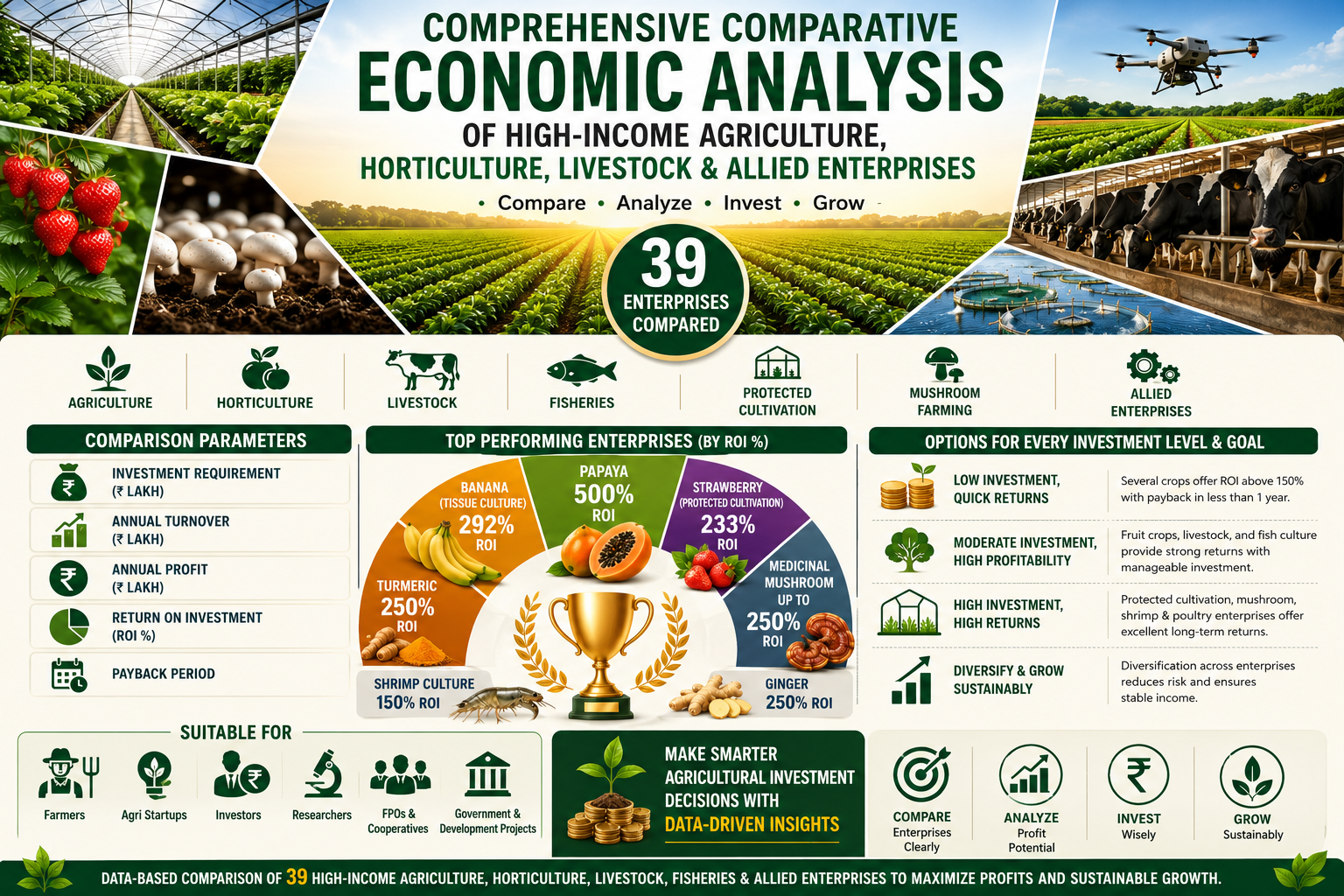
Economic Comparison of Profitable Agriculture, Horticulture, Livestock & Allied Enterprises
Understanding High-Income Farming Enterprises
High-income farming includes a variety of agriculture, horticulture, livestock, fisheries, and allied enterprises with different investment levels and profit potential. Low-investment options like Mustard, Maize, and Turmeric offer quick returns, while medium-investment enterprises such as Papaya, Banana, Goat Farming, and Fish Culture provide higher profitability. Advanced ventures like Protected Cultivation, Commercial Mushroom Farming, Shrimp Culture, and Poultry require greater investment but deliver strong long-term income opportunities when managed efficiently.